How an equipment manager keeps a travelling team shod
Fifteen players, two shoe sizes of variance each, four cities in six days, and a bag that has to arrive before the plane does.
A basketball team arrives in a city, plays, flies to the next city, and the room they walk into has everything they need already in it. Shoes in the right size, the right jerseys, the right braces, tape, the thing a particular player uses that nobody else uses. The person responsible for that has one of the most logistically demanding jobs in professional sport and the smallest public profile of anyone travelling with the team.
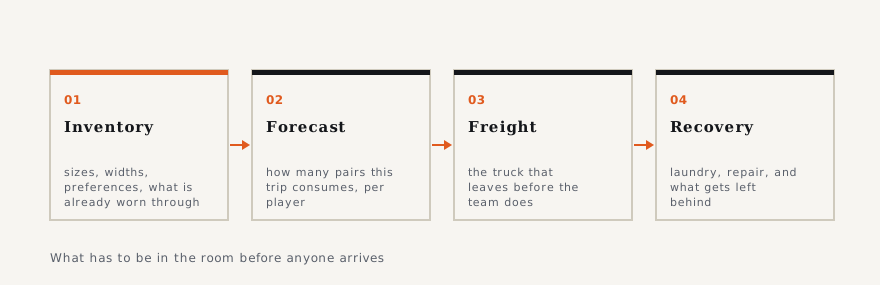
The inventory problem
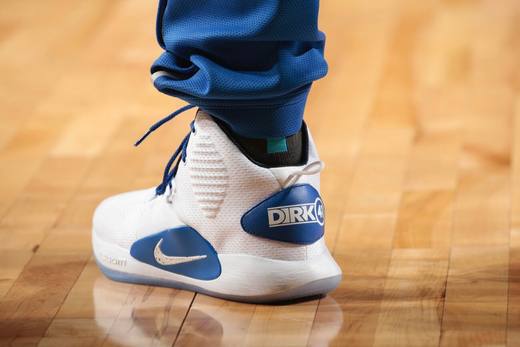
Start with footwear, because it is the clearest case. A roster of fifteen players, each with a size, a width preference, a model preference, and a rate at which they go through shoes that differs by position, playing style and how much they practise.
That inventory is not static. Players change models mid-season. A new signing arrives with requirements nobody has stock for. An orthotic or a brace changes the fit, which changes the size. Practice shoes and game shoes are frequently different. Every one of those variables has to be known rather than looked up, because the moment it is needed is usually a moment when there is no time.
The same structure applies to everything else: uniforms in home, away and alternate sets, compression layers, warm-ups, braces and sleeves, tape in several widths, and the specific unglamorous items — a particular insole, a particular shin sleeve — that an individual player will not play without.
The forecast
Before a trip the question is not what the team owns but what it will consume. A four-city trip in six days consumes shoes, tape and laundry capacity at a rate that depends on how many practices are scheduled, what the floors are like, and who is carrying an injury that is being taped daily.
Getting that forecast wrong in one direction means freight weight and cost for things nobody used. Getting it wrong in the other means somebody plays in the wrong shoe, and that is not a cosmetic failure: footwear is a soft-tissue injury variable, and an equipment manager who sends a player out in an unfamiliar shoe has created a medical risk.
The freight
The gear does not travel with the team. It leaves before the team does, in a truck, and it has to be in the visiting locker room before anyone arrives. Which means the packing decision is made before the last game at the previous stop has been played, and whatever gets used in that game has to be accounted for in advance.
This is the structural constraint of the job: almost every decision is made before the information that would inform it exists. A player who tweaks an ankle in the second quarter needs something tomorrow in another city, and the truck carrying tomorrow's supplies left this morning.
The standard answer is redundancy — carrying more than the forecast requires, which costs weight — and a small travelling kit that moves with the staff rather than with the freight. The balance between those two is most of the craft.
Laundry is not a detail
A travelling team generates a volume of laundry every single day that has to be turned around overnight, in a building the staff does not control, on machines that may or may not be adequate. Practice gear used in the afternoon has to be clean by the following morning.
When laundry fails — a broken machine in a visiting arena, a late arrival — the consequence is immediate and visible, and the fallback is the redundant stock. Equipment managers carry spare sets specifically against this, which is one of the larger contributors to freight weight and one of the least negotiable.
What gets left behind
At the end of a trip something is always abandoned: shoes beyond use, gear that failed, items a departing player no longer needs. Deciding what comes home and what does not is a small ongoing audit, and it feeds back into the inventory that starts the whole cycle again.
Why it is worth knowing about
Because the visible part of professional sport rests on a layer of logistics that is designed to be unnoticeable, and the measure of the job is that nobody ever thinks about it. The only time an equipment manager becomes visible is the one night something is missing — which is a strange standard to be held to, and the people who do it well regard it as the point.