Why the corner three is the cheapest shot on the floor
Same three points, shorter distance, better assist rate, worse rebound. The corner is a bargain with a bill attached.
The corner three is the most discussed shot in modern basketball and the least understood as a transaction. It is described as efficient, which is true, and the reasons given are usually only half of the reasons. It is shorter, yes. But it is also the shot that comes with the largest set of attached costs, and the teams that build around it pay those costs deliberately.
Why it is shorter
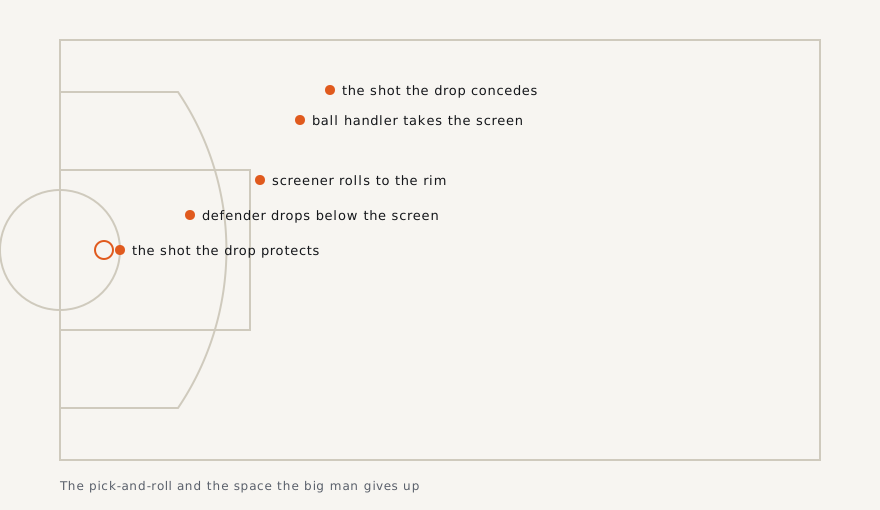
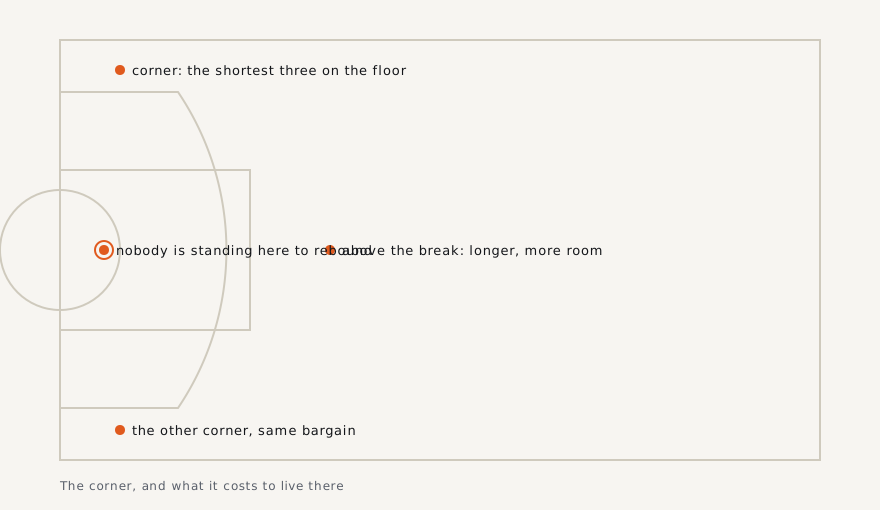
The three-point line is not a constant distance from the basket. It is an arc, and the arc is cut off by straight segments running parallel to the sidelines, because a true arc of the same radius would run out of court. Along those straight segments, in the corners, the line sits measurably closer to the rim than it does at the top of the arc.
That is the whole geometric story, and its consequence is immediate: a shot from the corner is worth three points and taken from a distance closer to a long two. Of all the ways to get three points, this is the shortest.
The second reason: who takes it
A corner three is almost never a self-created shot. It arrives from a pass — usually from a drive that pulled a defender out of the corner, or from a kick-out after the defence collapsed on a roll. In the ordinary case the shooter has been standing still, feet set, for a second or more before the ball arrives.
A stationary, set, pass-fed shot is the easiest kind of jump shot there is. So the corner three combines the shortest three-point distance with the mechanically simplest version of the attempt. That compounding, not the geometry alone, is why the shot converts as well as it does.
The third reason: it is where the defence least wants to be
A defender in the corner is in the worst help position on the floor. He is in a dead zone: he cannot easily rotate to the rim without giving up the shot entirely, and he cannot stay attached to his man without conceding the drive. Offences put shooters in the corners precisely to strand defenders there.
This is the part that makes the corner a spacing tool rather than only a shot. A shooter who never receives the ball still does work by standing there, because his defender is pinned. Some of the value of the corner three is realised by other players.
Now the bill
Three costs, all real.
The first is rebounding. A player in the corner is as far from the rim as anyone on the floor and has the worst angle to it. Every shooter stationed in a corner is a player who will not be rebounding, which is a straightforward reason corner-heavy offences tend to concede offensive rebounds and to be vulnerable in transition when a shot misses.
The second is transition defence. The corners are at the baseline. When possession turns over, the two players furthest from the defensive basket are the corner shooters, and they are behind the play. A team that lives in the corners is accepting a structural disadvantage every time the ball changes hands.
The third is the margin for error. The sideline and the baseline both run close to the corner, so the usable floor is small. A shooter who drifts is out of bounds; a shooter who steps in is taking a long two, which is the worst shot in basketball by value. The corner is efficient only if the feet are right, and the feet have almost no room.
Why it still gets taken
Because the arithmetic survives the bill. A shot worth three points, converted at a decent rate, from a stationary set position, produces more value per attempt than almost anything except a shot at the rim and a free throw. The costs are paid in rebounds and in transition, which are real but smaller than the gain.
That is the whole modern strategic argument in miniature: not that the corner three is a good shot in isolation, but that its costs are cheaper than its benefit, and that the costs show up in places where people are less likely to count them.
What to watch
Watch the corner when the ball is on the other side of the floor. If the corner defender is standing still, pinned, doing nothing, the offence is already winning the possession and the shot has not even been taken. That is what the corner three is actually for.