A newsroom moment that now feels normal
Regulators in the Spotlight: What New Betting Laws Mean for News Coverage
Note: This article is for information. It is not legal advice. Laws change fast. Please check with legal counsel before you publish.
A newsroom moment that now feels normal
The sports desk is on deadline. A producer drops a bright box into the story: live odds for the late game. The headline says a team is “a lock at +120.” Then the lawyer walks over. “Prime time, youth audience risk, and that button that says ‘Bet now’ is a problem.” The room goes quiet. A small edit turns into a full rethink: the headline, the odds box, the footer with affiliate links, the age note. It is not just ad copy that has changed. News has changed too. New betting rules now touch words, links, widgets, and where your story can run.
The pivot: what actually changed
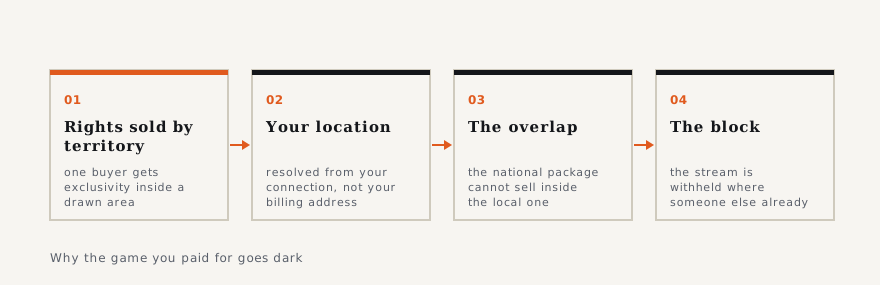
In the United States, one case set the scene. In 2018 the Supreme Court ended the federal ban that had blocked most sports betting. See the Murphy v. NCAA decision. Since then, rules moved to the states. That means one story can be compliant in one state and risky in another. In the UK, the Gambling Commission and ad bodies tightened rules on youth appeal and bonus talk. In Canada (Ontario) and Australia, regulators set bright lines on when and where gambling ads can show, and what can appear in live sport. In the EU, platform and ad duties rose with new digital laws, and they put minors at the center.
Here is the key shift for newsrooms: if a story has calls to action, bonus language, promo codes, trackable links, or “Bet now” widgets, parts of that page can fall under ad and marketing rules, not just press rules. That also means more work on disclosures, age checks, and data. It is less about intent and more about impact.
Field note: where news ends and promo begins
This line can be thin. News is free to report facts. But
- A headline with “Claim X bonus” is ad-like, not news-like.
- Odds widgets that pair prices with “Sign up” push a user to act. That is a marketing function.
- Promo codes in a news story make it a hybrid page. That triggers ad rules.
- “Best book for this game” without clear, up-front disclosure is a red flag.
- Any content with clear youth appeal next to betting talk risks a breach.
Ask one fast question before publish: “If I remove the call to act, does the story still work as news?” If not, route it through ad compliance.
Fast explainer table: who regulates what
Use this table as a quick map. It is not full law advice, but it shows who cares about which part of your page, and why.
| UK — UK Gambling Commission (UKGC) | Marketing rules tied to licensed gambling | Inducements, youth appeal, targeting | Avoid “bonus” claims in headlines; add safer-gambling notes | UKGC advertising rules |
| UK — CAP Code (via ASA) | Non-broadcast ad code, Section 16 (Gambling) | Role models under 25, problem-gambling cues | Check copy near odds; avoid glamor words like “easy win” | CAP Code Section 16 |
| US — FTC | Endorsements and affiliate disclosures | Clear, close, and upfront disclosures | Mark affiliate links before the first link or button | FTC Endorsement Guides |
| AU — ACMA | Gambling ad rules, including live sport windows | Prime-time limits; in‑play visibility | Be careful with live-game odds and promos in broadcasts | ACMA gambling ad rules |
| CA (Ontario) — AGCO | iGaming standards (ads, minors, affiliates) | Age-gating; language on offers | Disclose terms, avoid inducements; add age screens where needed | AGCO iGaming standards |
| EU — Digital Services Act | Platform duties; ad transparency; minors | Ad labeling; data use for targeting | Label sponsored spots; mind data and profiling near minors | DSA overview |
| US — American Gaming Association | Industry code for responsible marketing | Tone, placement, safer-gambling | Use as a “north star” even if not a law | AGA Marketing Code |
| UK — Ofcom (broadcast) | Standards for TV/radio content | Harm, offense, scheduling | Keep betting segments clear of youth shows and times | Ofcom Broadcasting Code |
Two cautionary headlines (and what they teach)
Case 1: “Star striker joins brand X; new users get £50 free.” This looks like a news post, but the bonus phrase makes it an ad. In the UK, ad bodies have ruled against use of bonus talk and youth-facing stars in ways that blur lines. See how Section 16 bars content that could appeal to kids, and how “free” is a loaded word with strict terms.
Case 2: “Odds swing after injury; tap to place your bet now.” In a live blog, a “place your bet” line can turn a feed into a marketing slot. That is high risk in live sport windows in Australia and risky for minors anywhere. If your editors want to show odds as data, show them as data, not as a call to act. No promo voice. No inducements. No push to sign up in the editorial flow.
For a sense of how strict this gets in the UK, review the gambling section of the CAP Code linked above and real ASA rulings, such as the Ladbrokes case from 2022, where tone and role models were key.
Editor’s notebook: small choices that now matter
Headlines: stick to facts. “Team A is +120” is data. “Team A is a lock at +120” adds hype. Remove “lock,” “sure bet,” “easy win,” “free,” “risk‑free,” “no‑brainer.”
Ledes: set context, not a pitch. If you list odds, name the source and time stamp. Do not add promo codes in the lede. If a promo must appear, keep it out of the news block and label it as commercial before any link or button.
Labels and borders: mark affiliate boxes and “sponsored” blocks with a top label, not at the bottom. Use clear words: “Advertisement,” “Sponsored,” or “Affiliate link.” Do not hide labels in light gray or tiny type.
Broadcast and audio: if you cover odds on air, time and placement matter. Read the Ofcom Broadcasting Code for context on harm, offense, and scheduling. For print and online newsrooms in the UK, the Editors’ Code of Practice helps on accuracy and children.
Language to avoid near betting content
- “Bet now” (use neutral data words)
- “Free” (unless it is truly free with no strings)
- “Risk‑free” (almost never accurate)
- “Guaranteed,” “lock,” “sure thing”
- “Easy money,” “win big fast,” “no losses”
Money, links, disclosures
If your page can earn money when a reader clicks, disclose that up front and in plain words. In the US, the FTC Endorsement Guides say disclosures must be clear, close to the claim, and hard to miss on all devices. Put the disclosure before the first affiliate link or odds widget. Repeat it if the page is long. Do not hide it in the footer.
One safe pattern: “We may earn a fee if you click links in this story. Our news is independent.” If you work with an outside review hub to fact‑check operator safety and licenses, say so in neutral text and link once. For background on how betting works (not to push a bet), you can read the full betting guide. Place this type of link above any odds or bonus talk, and avoid hype words.
If you use influencers, study the EASA influencer best practice. Use the same standard inside your own brand posts. Keep trust high with strong internal rules. Many newsrooms align to the Reuters Trust Principles: clear, fair, and free of improper bias. Your ad and affiliate teams should follow the same spirit and not shape the news.
Data, privacy, and minors
Pages with betting content need extra care on data. Check which scripts fire. Do you drop pixels tied to gambling ads? Do you profile users on these pages? Some laws set tougher limits when minors may see the page. Age‑gating helps, but it is not a cure‑all. Avoid push alerts that mix “breaking news” and sign‑up offers. Keep child‑friendly pages free of betting links or odds.
Add help info where you report on betting harms. The World Health Organization lists gambling disorder in the ICD. See the ICD‑11 entry for gambling disorder. In the US, the National Council on Problem Gambling runs a help line: 1‑800‑522‑4700. Add a local help link for each region you cover.
Cross‑border traps when you syndicate
One story, many risks. A UK‑safe story may not be safe in an EU state or in Australia, due to live-sport rules. A US piece with affiliate links could be fine in one state, and offside in a state that bans that operator. If you republish by feed, tag regions in your CMS. Keep variants for risky lines. For example, auto‑hide sign‑up language for AU readers during sport windows. In Canada (Ontario), check that any offer language lines up with AGCO rules. Small CMS tools, like region‑aware components, save you costly edits later.
What to watch next
Expect closer looks at:
- Influencers and athletes in promos, even when posts seem like “organic” news
- Live odds shown on screen during games and in live blogs
- Browser alerts and push notes that blend news and inducements
- Dark patterns on landing pages (e.g., pre‑ticked boxes, unclear “free” offers)
- Use of first‑party data to target betting content at young adults
Plan now: map your risk points, write short rules for each format, and rehearse edits you will need on deadline.
Quick newsroom checklist
- Does the page ask readers to act (sign up, claim, bet)? If yes, add clear labels and legal review.
- Is there an affiliate link or odds widget? Put a disclosure above the first one.
- Remove hype words: “free,” “risk‑free,” “lock,” “sure thing.”
- Check youth risk: images, slang, memes, and placement near kids’ content.
- Show odds as data, not as a prompt to bet. No “Bet now” buttons in editorial.
- For TV/audio, check timing and placement rules in each region.
- Geo‑target risky elements; hide them where rules ban them.
- Add safer‑gambling help links and age notes where needed.
- Audit scripts and pixels on betting pages; avoid profiling minors.
- Link to primary sources (regulators, courts) inside the text.
- Stamp “informational, not legal advice.”
- Log changes; update the page when rules change.
Can a news site list odds?
Yes, if you show them as data (source and time) and avoid calls to act. Do not add promo codes in the same block. Keep youth risk in mind. In some places, on‑screen odds during live sport have tight limits.
Do we need affiliate disclosures on category or index pages?
If a page has affiliate links or blocks with sign‑ups, add a clear, near‑top disclosure. On mobile, put it above the first link or tile. If a page is pure news with no links that pay you, a disclosure is not needed.
What is age‑gating best practice?
Do not rely on a soft “Are you 18?” wall. Pair checks with placement controls. Avoid betting modules near pages that kids may visit. Use CMS rules to keep risky blocks off youth content. Add help links where you cover harms.
How do we link to a review site without “promoting gambling”?
Use neutral anchor text and place the link in context. Say why you link (e.g., to explain odds or safety checks). Add your affiliate disclosure above it. Do not add “Bet now” or bonus talk near the link.
A short decision path: is this an ad?
- Does the page push a reader to sign up, claim, or bet? If yes, treat as ad or hybrid.
- Is there a trackable link to an operator? If yes, add disclosure at the top.
- Is bonus language in the headline or lede? If yes, move or remove it.
- Could minors see this page? If yes, reduce risk or apply age‑gating.
- Is the tone news‑like, or hype? If hype, rewrite.
Sources and credits
We used primary sources and official guidance to inform this page, including:
- Murphy v. NCAA (U.S. Supreme Court)
- UKGC advertising and marketing rules
- CAP Code Section 16 (Gambling)
- FTC Endorsement Guides
- ACMA rules on gambling ads
- AGCO iGaming Standards (Ontario)
- EU Digital Services Act overview
- AGA Responsible Marketing Code
- Ofcom Broadcasting Code
- Editors’ Code of Practice (IPSO)
- EASA Influencer Best Practice
- Reuters Trust Principles
- WHO ICD‑11: Gambling disorder
- NCPG helpline
Last updated: July 19, 2026. This page is reviewed on a rolling basis for legal and policy changes. Add your local counsel review before publication.